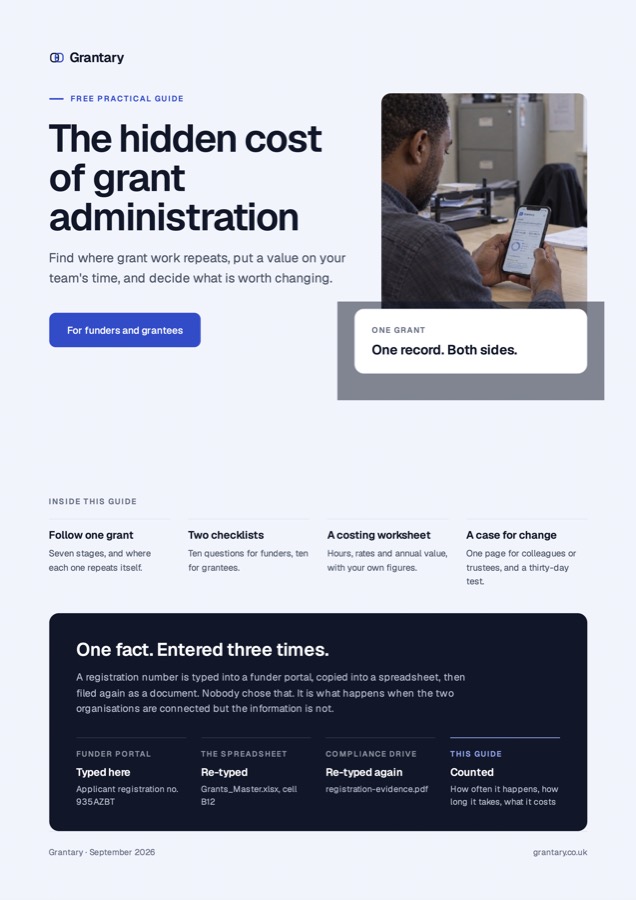
Free practical guide
The hidden cost of grant administration.
Find where grant work repeats, put a value on your team’s time, and decide what is worth changing. Sixteen pages, written for the people who run funding and the people who receive it.
- Works with the systems you already have. No Grantary account needed.
- Worked examples for a funder and for a charity, with the maths shown.
- A worksheet and a proposal template you can use the same afternoon.
Put a number on it
See what the repeated work costs before you read a page.
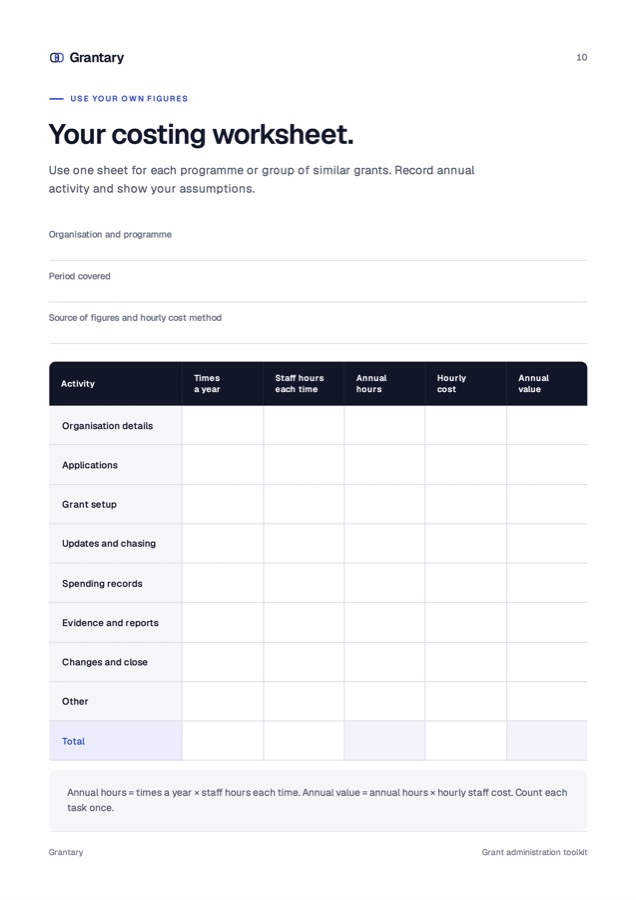
The guide walks you through this with a worksheet. Here it is live: change the figures to your own and watch the annual cost move. It opens on the funder example from the guide. Switch sides for the charity one.
Inside this guide
Follow one grant
Seven stages, and where each one quietly repeats itself.
Two checklists
Ten questions for funders, ten for grantees.
A costing worksheet
Hours, rates and annual value, filled in with your own figures.
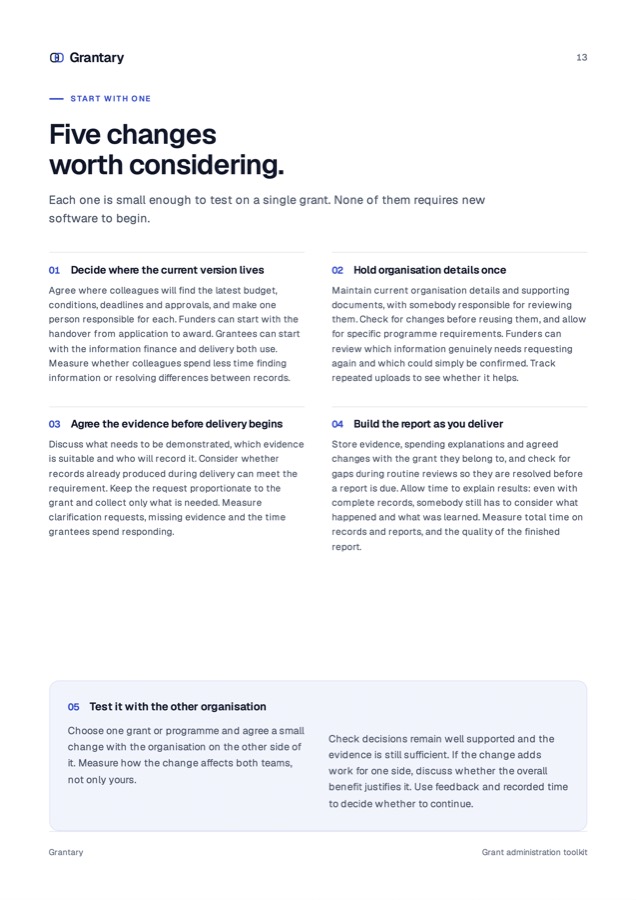
A case for change
A one-page proposal for colleagues or trustees, and a thirty-day test.
A look inside
The two worked examples are invented to explain the method. Their workloads, rates and reductions are assumptions, not industry averages or measured results.
Who it is for
One method, read from either side.
Anyone who runs a funding programme or manages funding their organisation has received. No finance background is needed. The guide walks through where the same information gets entered twice, and what that costs across a year.
Grantary keeps the record of the money. It does not hold or move it.
See the same idea working on a grant like yours.
The guide shows you where the work repeats. The demo shows you one record carrying the grant from application to impact, with nothing re-keyed.